
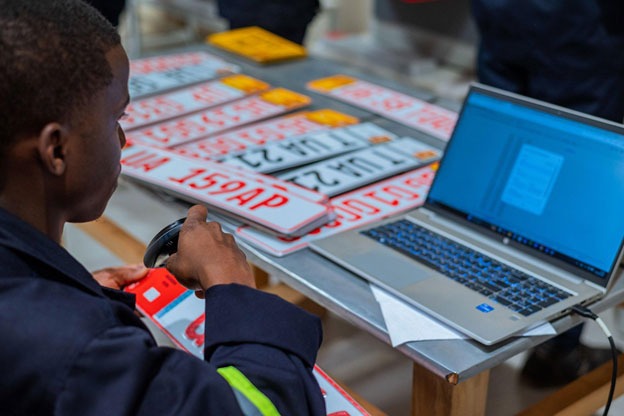
Motor vehicle and motorcycle dealers have asked the government to terminate its 10-year contract with Russian company Joint Stock Company Global Security, arguing that the rollout of digital number plates has disrupted business operations instead of improving vehicle security.
The traders say the Intelligent Transport Monitoring System (ITMS), introduced to track all registered vehicles and motorcycles through digital number plates, has been plagued by persistent shortages of number plates and prolonged delays in their issuance.
On Saturday, motorcycle dealers, car dealers and bond operators marched to the Ministry of Works and Transport to protest the delays, which they say have left hundreds of vehicles and motorcycles stranded in bonded warehouses for months.
During a meeting with the Minister of Works and Transport, Fred Byamukama, the traders said they complete the registration process and pay all the required fees but are forced to wait for months before receiving number plates.
They argued that the delays have increased operating costs, tied up capital and prevented them from delivering vehicles to customers on time.
A motorcycle dealer in Nakawa said the digital number plate system has posed serious challenges since it was introduced in 2024.
He said the contractor frequently runs out of number plates, forcing some dealers to wait for as long as five months after making payment.
"I know of one motorcycle company with 20 containers carrying about 1,000 motorcycles that are still at the bond because there are no number plates," he said.
"This has greatly affected our businesses. We pay for the number plates but wait more than three months without receiving them. The financial losses are huge," he added.
Each digital number plate for a newly registered motorcycle costs Shs714,300. Traders said a company that imported 1,000 motorcycles paid more than Shs714 million for the number plates, but the motorcycles remain at the bonded warehouse because the Uganda Revenue Authority cannot clear them without registration plates.
Car bond operators said they have repeatedly raised the issue with officials from the Ministry of Works and Transport over the past two years, but little has changed.
They urged the government to terminate the contract, arguing that the contractor has consistently failed to deliver the service required under the agreement.
The traders also questioned the management of the project, warning that continued delays could inflict even greater financial losses on the motor trade industry if the situation is not addressed.
In response, Byamukama acknowledged that implementation of the ITMS has encountered challenges and admitted that the delays have negatively affected businesses while undermining the project's intended security objectives.
He said the ministry would work with the contractor to resolve the problem within a three-month grace period.
"People are accusing dealers of fraud because they wait months for their vehicles," Byamukama said. "The President wants faster service delivery. We have improved services such as passports and permits, and digital number plates should also be issued quickly."
The minister attributed the delays to the contractor supplying number plates in limited quantities and pledged that the ministry would engage the company to ensure a steady supply.
The traders also accused some officials at the Ministry of Works and Transport of demanding bribes of about Shs1 million to fast-track the processing and release of digital number plates.
They called for investigations into the allegations and urged authorities to prosecute any officials found to have engaged in corruption.
